Side elevation
architecturAL aquarelle
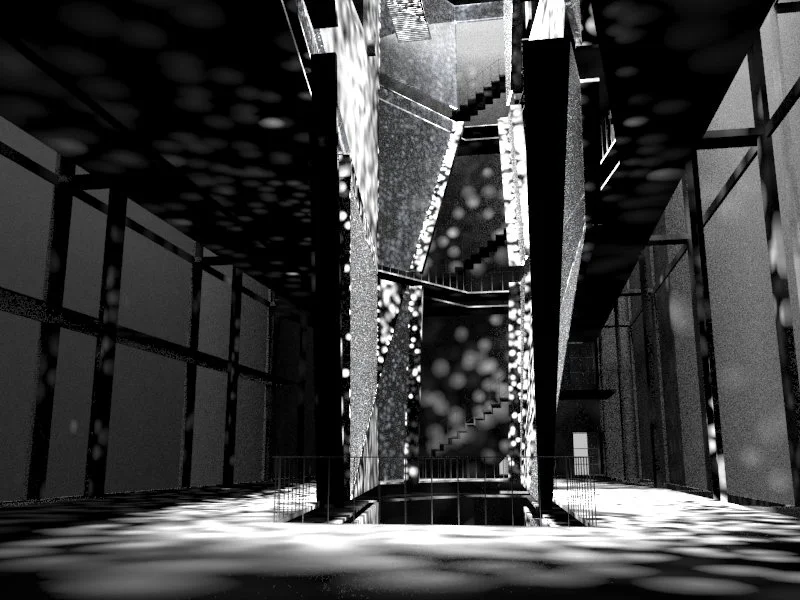
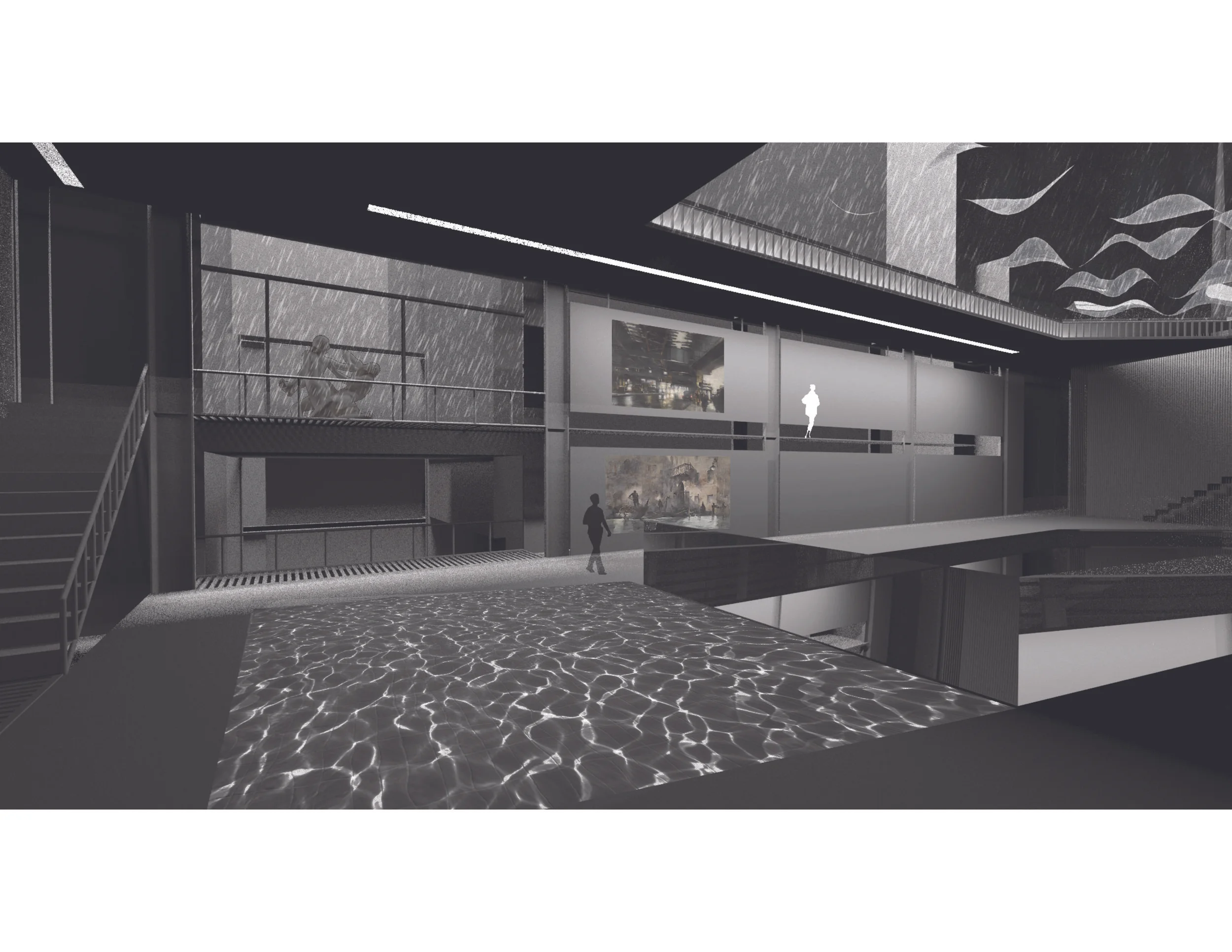
Located on 5th Ave in New York City, the American Watercolor Society (also known as the Salmagundi Club) undergoes a fictional renovation after a fire destroys everything but the building facade. The facade becomes a relic as the new structure supports the Society’s collection of artwork. The new museum introduces a scaffolding that shores the adjacent brownstones and a rooftop “lens,” bringing light down into the building’s core. Watercolor was used as a means of architectural rendering in response to the museum’s generous collection.
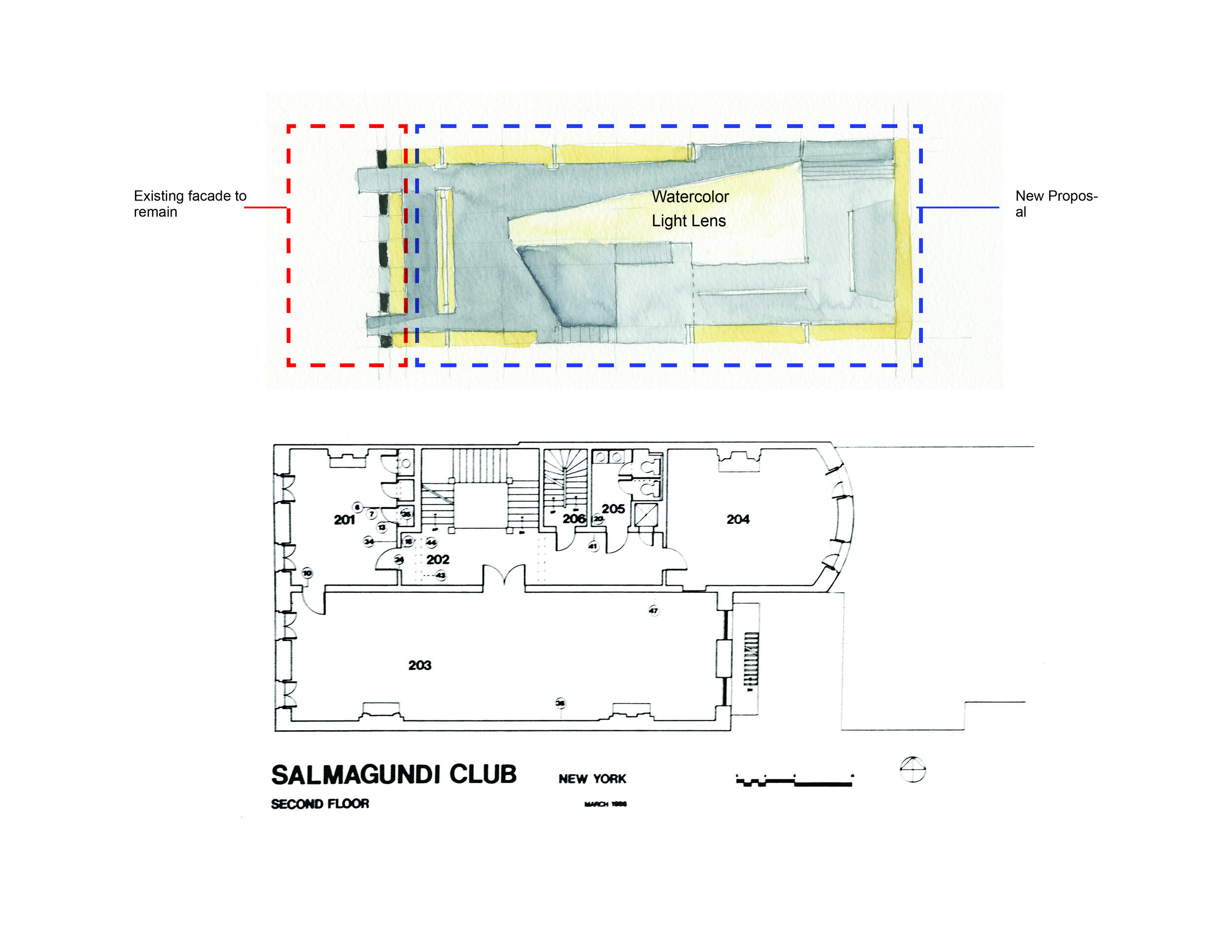
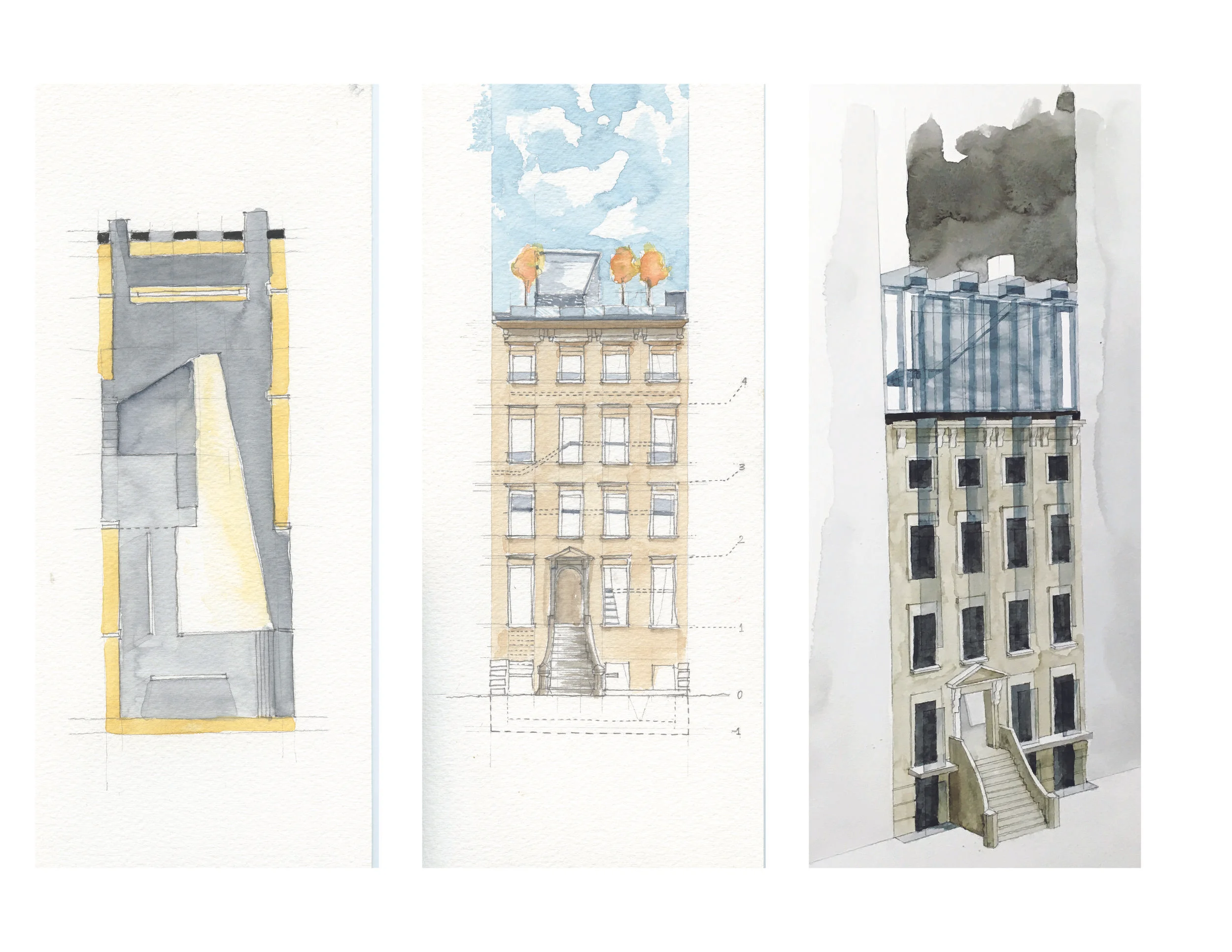
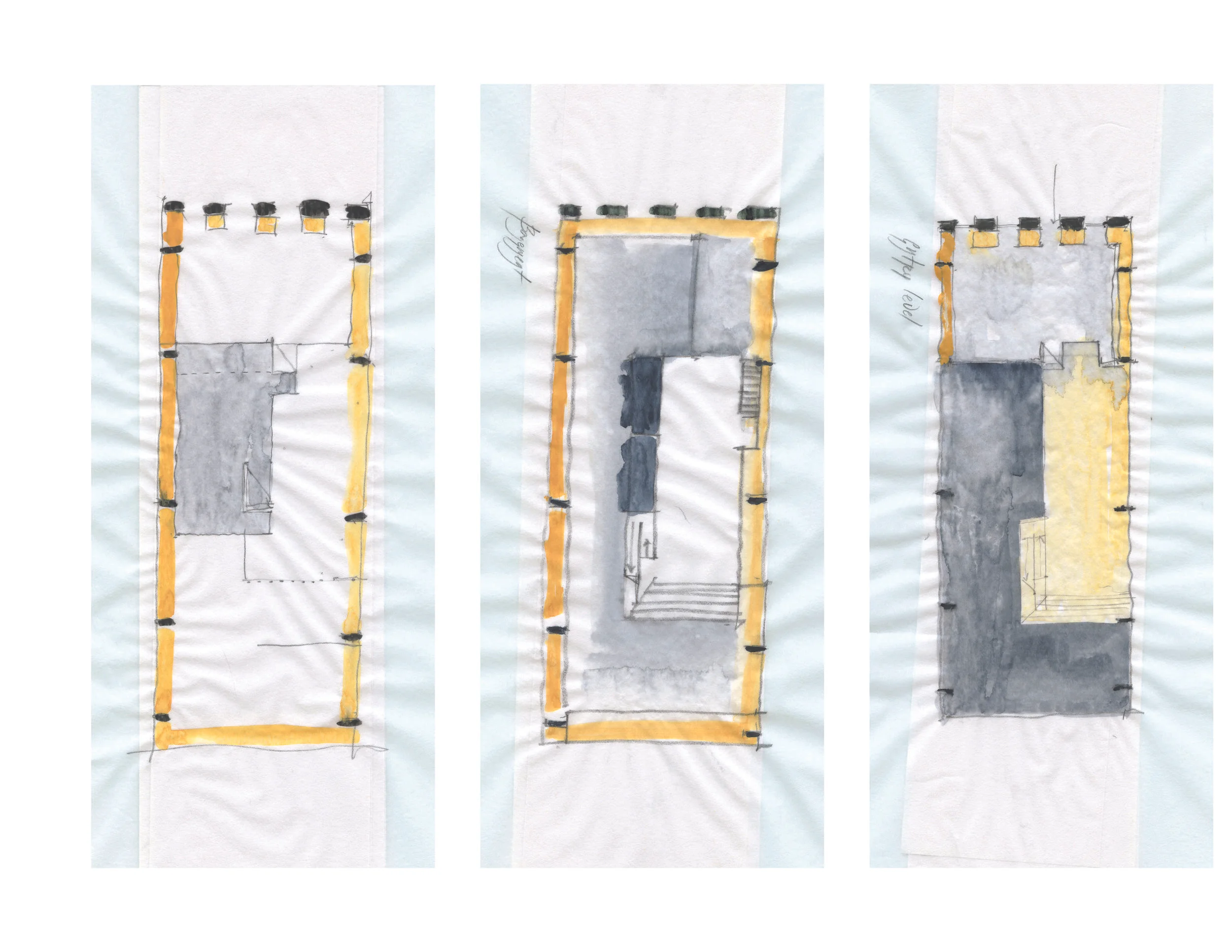
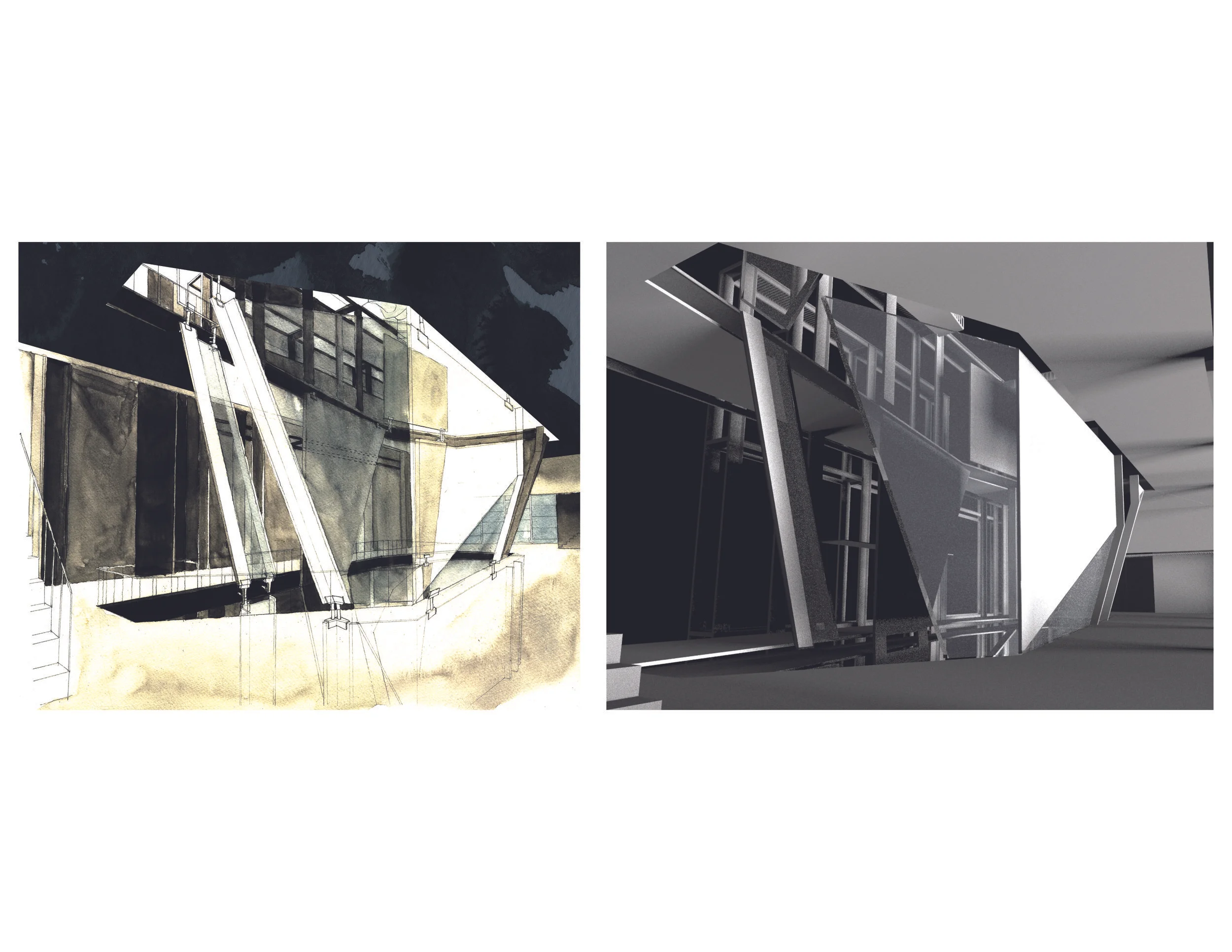
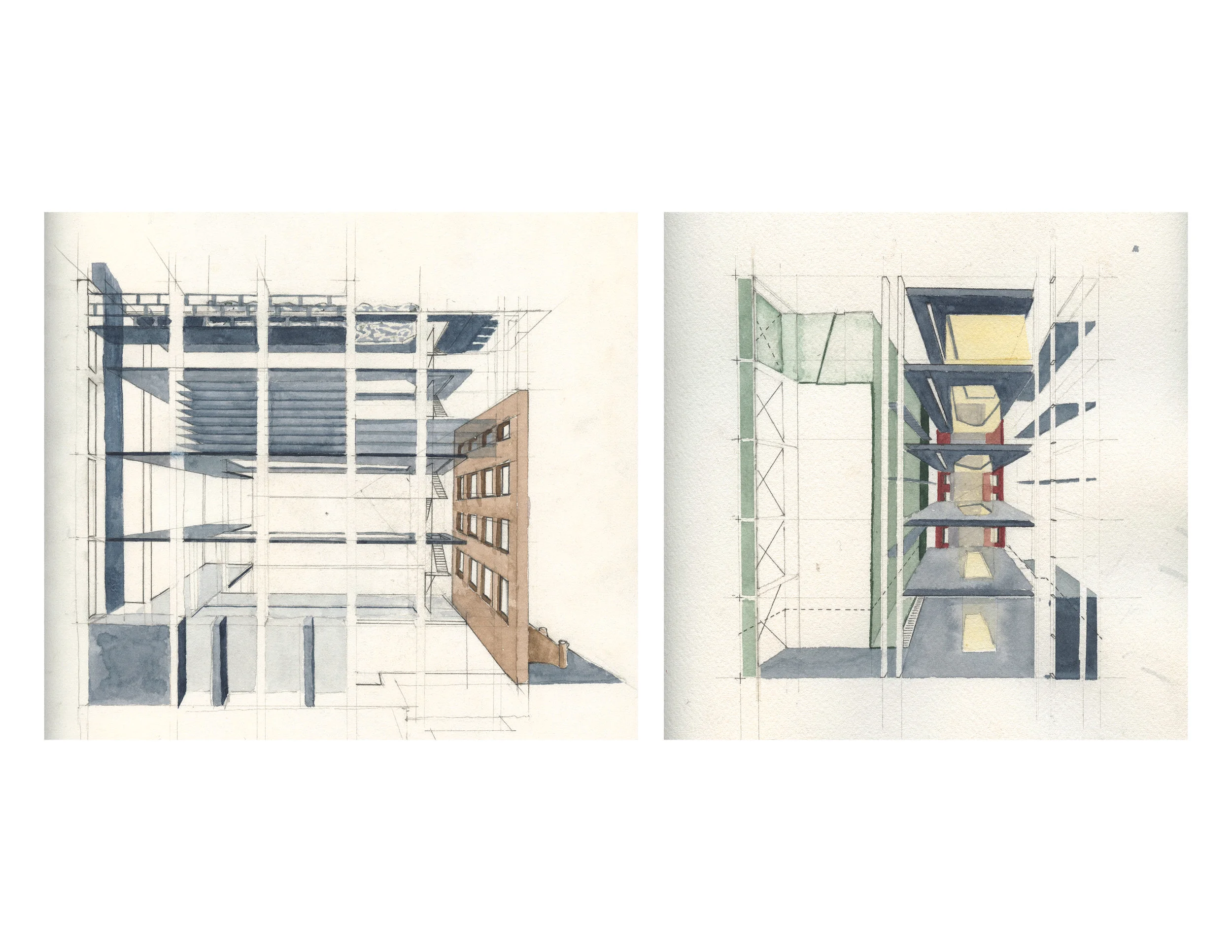
Watercolor was experimented with as a way to discover formal transparency, lighting conditions, and adaptations with the pre-existing facade.
Both the rear facade and the interior spaces explored the architectural manifestation of “watercolor space,” insofar as the use of light, varying degrees of transparency and overlapping figures or zones create a richness of spatial perception and articulation.
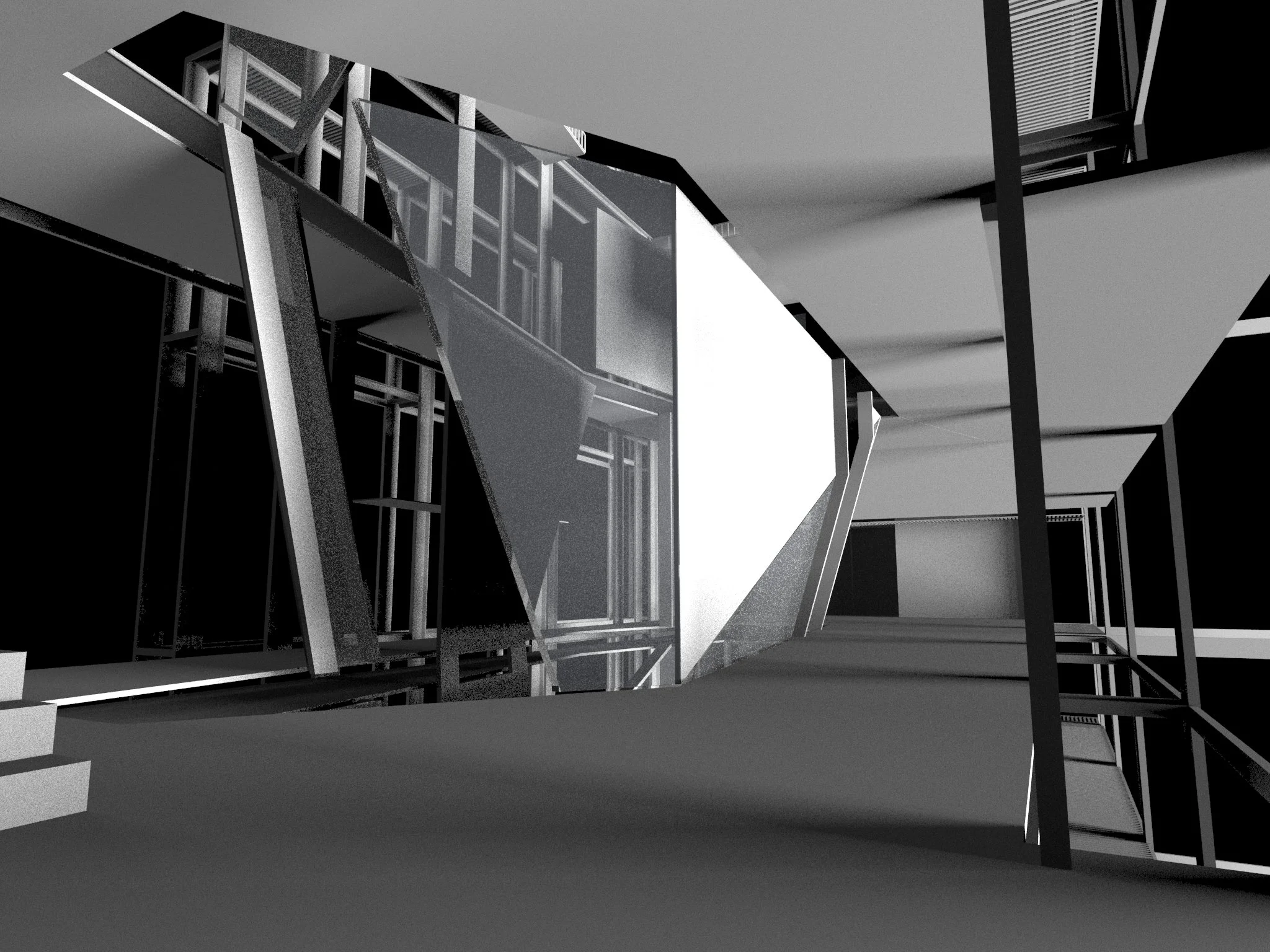
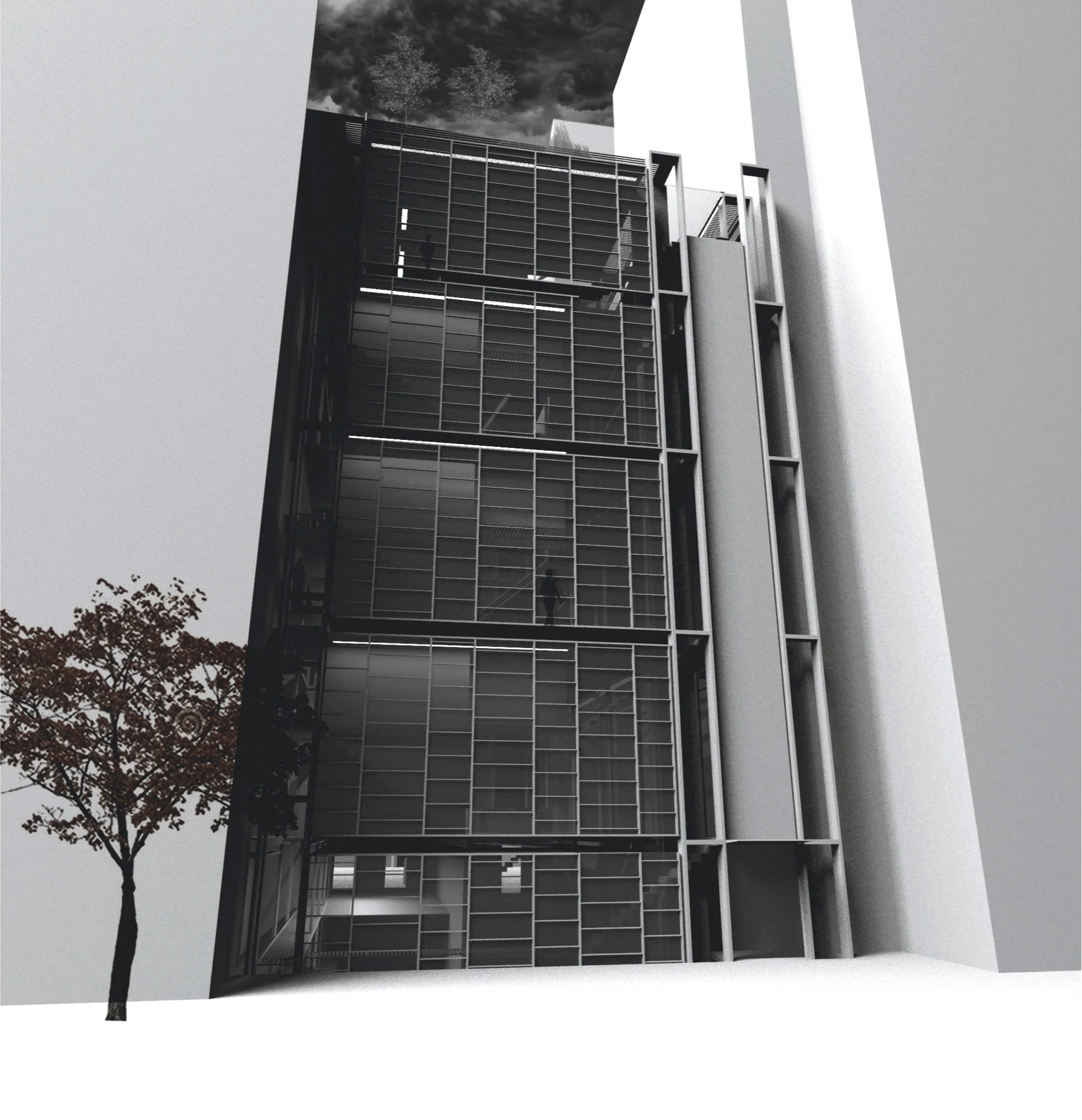
Both the rear facade and the interior spaces explored the architectural manifestation of “watercolor space,” insofar as the use of light, varying degrees of transparency and overlapping figures or zones create a richness of spatial perception and articulation.
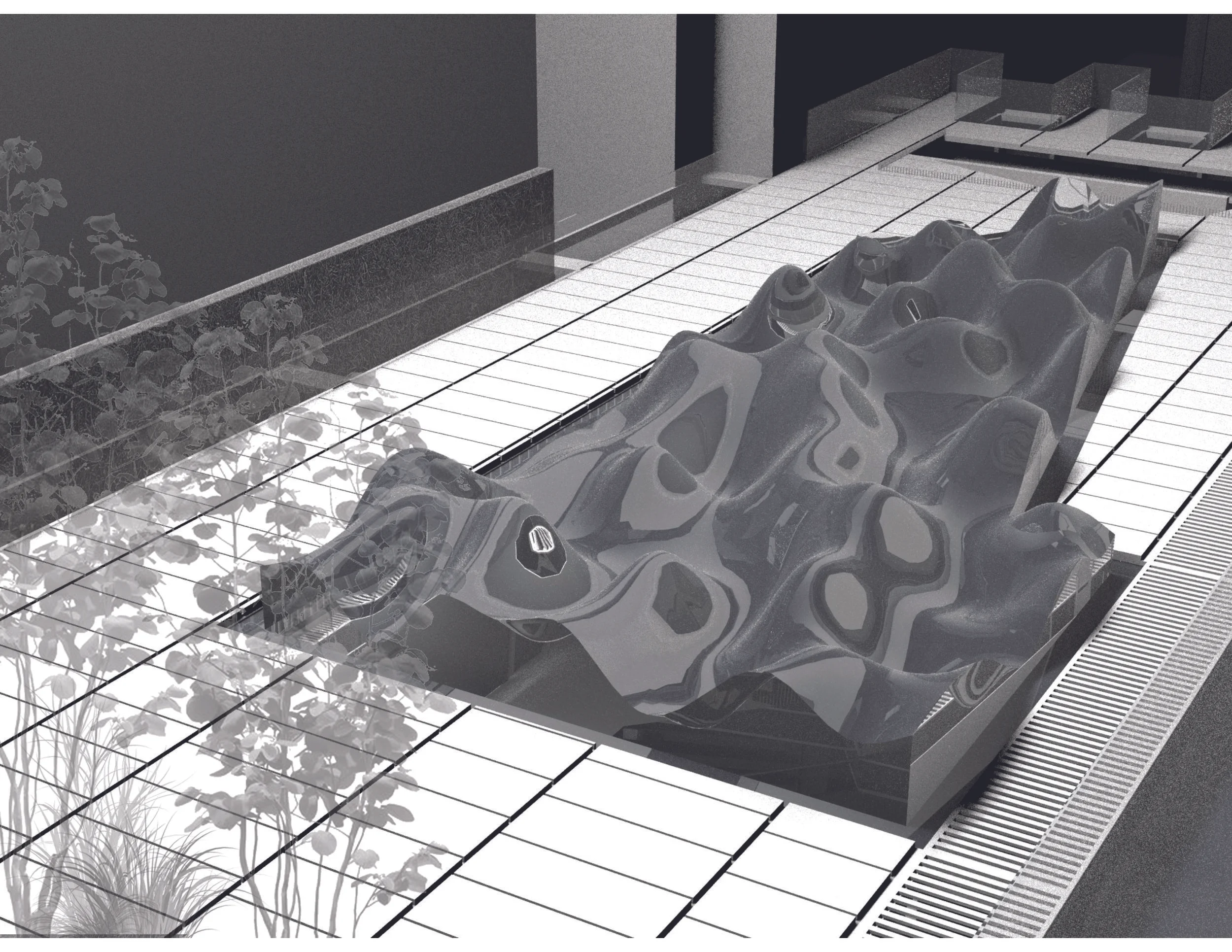
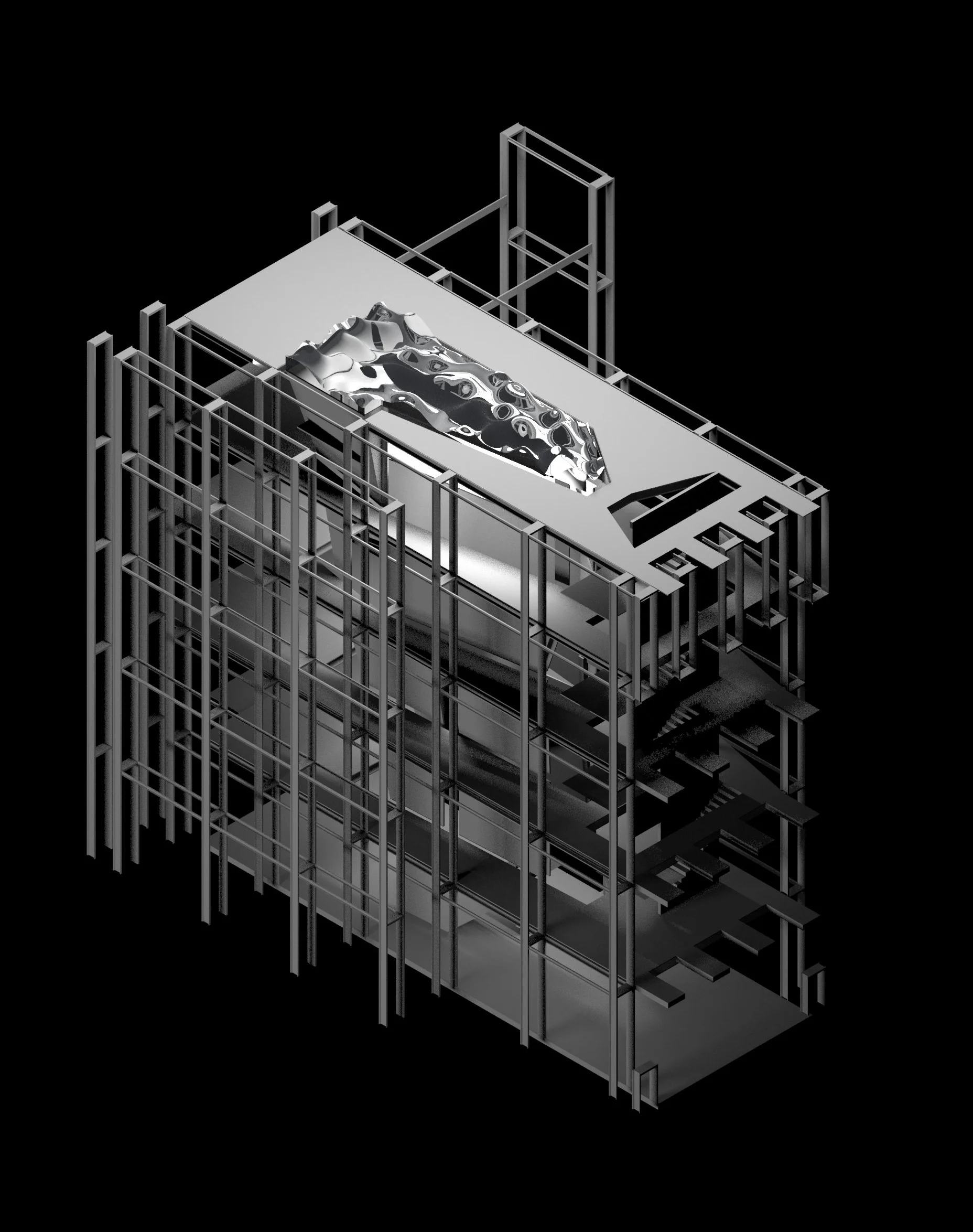
Inspired by brownstone shoring techniques, a scaffold was introduced to support floor plates as well as program blocks that fill the structure.